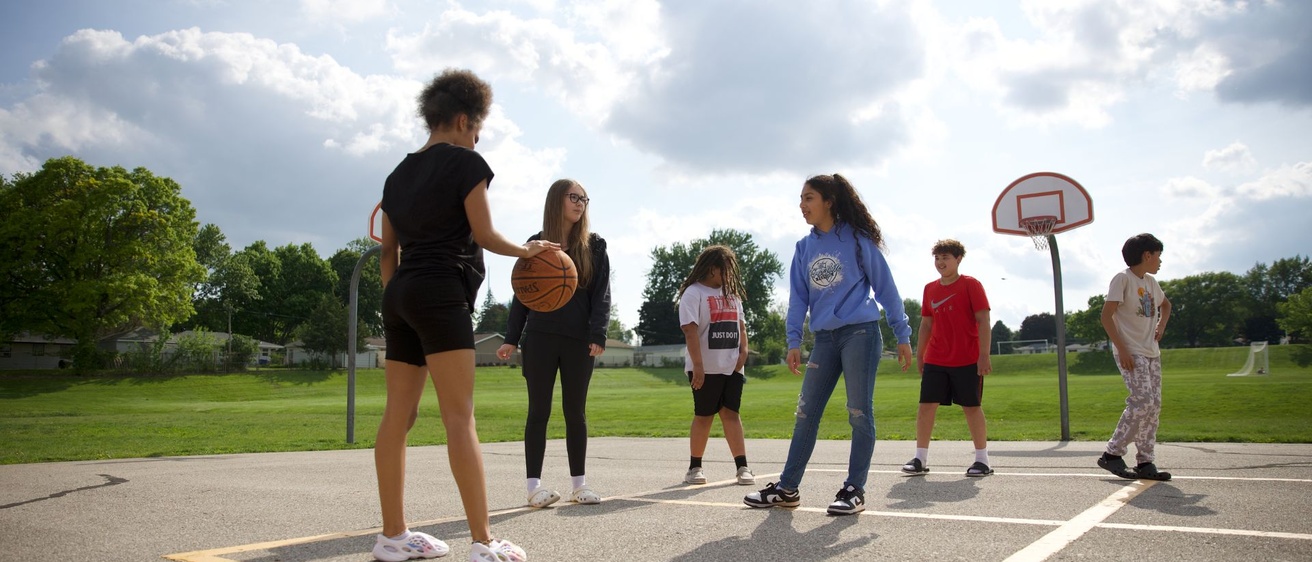
Schools do not, and cannot, operate in a vacuum. They mirror the strengths and fractures of the communities around them. When communities invest in third spaces - the places outside home (first space) and school/work (second space) where people gather, linger, and connect, they strengthen the social ecosystem that students, educators, and families rely on every day.
Put simply: healthy communities create the conditions for healthy schools. Ignoring one while tending to the other only delays problems, allowing them to deepen, spread, and eventually spill back into the school environment.
The Problem We’re Not Naming Clearly Enough
In the past decade, accelerating dramatically after COVID-19, schools have absorbed more and more of society’s unmet needs. Educators are now asked to address mental health challenges, family instability, behavioral dysregulation, trauma exposure, and social–emotional development, often without the community infrastructure that historically shared these responsibilities.
At the same time, many community gathering places: libraries, youth centers, faith-based programs, neighborhood cafés, arts organizations, even public parks, are disappearing, underfunded, or underused. These spaces are not just “nice to have.” They are structural supports that distribute the emotional labor of raising and supporting young people. When these community anchors erode, schools become the singular default providers. And the system buckles.
What Do We Mean by “Third Spaces”?
Sociologist Ray Oldenburg (1991) described third spaces as informal, accessible places where people gather voluntarily, build relationships, and create shared meaning. They are neutral, low-pressure environments that foster belonging and social cohesion.
In today’s educational landscape, third spaces include:
Community centers and after-school clubs
Public libraries, makerspaces, and teen advisory boards
Faith-based youth programs
Parks, recreation leagues, and arts programs
Cafés, barbershops, and other informal hubs
Intergenerational mentorship programs
School-based wellness rooms or family resource spaces
These spaces form the connective tissue of a community - the networks that hold people through hardship and lift them toward possibility.
Why Third Spaces Matter for Systems Wellness
1. They Build Connection and Belonging. Strong relationships are the most powerful buffer against stress and trauma for children and adults.
The CDC’s Youth Risk Behavior Survey (2023) highlights school connectedness as a core protective factor, and connection strengthens when students are embedded in a broader network of caring adults and peers, not solely educators.
Bruce Perry and colleagues argue that relational health is the most important predictor of recovery and resilience for trauma-exposed individuals (Perry & Winfrey, 2021).
Third spaces expand the web of relationships holding every young person.
2. They Reduce Burnout and Isolation—For Adults and Youth. Educators are more effective and more resilient when their communities support them.
Research shows teachers who experience strong relational and community support are less likely to burn out (Santoro, 2018).
Informal social support lowers stress and strengthens resilience for adults in helping professions (Farrell & Mahon, 2021).
Third spaces become pressure valves - places where adults recharge, connect, and regain perspective.
3. They Support Identity Development and Growth. Young people need low-stakes environments where they can explore who they are and who they want to become.
Third spaces provide autonomy, agency, and opportunities for meaningful participation (Eccles & Gootman, 2002).
Youth development programs such as Boys & Girls Clubs or YMCA initiatives consistently show positive impacts on civic engagement, academic motivation, and wellbeing (Lerner et al., 2005).
Identity grows in the spaces where youth are trusted, not judged.
4. They Strengthen Community Resilience. Resilient communities help schools weather crises.
Community resilience research shows that networks characterized by trust, mutual support, and shared space recover from adversity more quickly and with fewer long-term consequences (Norris et al., 2008).
When parents, educators, and young people share common spaces, informal relationships form, miscommunication decreases, and trust rises—making schools more approachable and more effective.
Strong communities are protective factors for entire educational systems.
What Can We Do Right Now?
For Educational Leaders
Open school spaces to the community after hours - gyms, fields, libraries, studios. Invite people in… encourage community.
Build partnerships with local businesses, libraries, parks, museums, and nonprofits. They can help fund and support these “after hours” community activities. Help them to see why this is valuable.
Support student-led initiatives that connect civic life with school life.
Advocate for zoning and local policy decisions that preserve and protect community gathering spaces.
For Community Members and Families
Recognize that community wellness and school wellness are intertwined.
Show up in community spaces. Your presence is a protective factor.
Volunteer, mentor, or partner with youth organizations.
Advocate for proper funding.
For Policymakers and Funders
Invest in wraparound community infrastructure, not only school-based interventions.
Support programs that rebuild informal networks: libraries, recreation centers, teen programs, intergenerational initiatives.
Resource collaborative school–community models that honor shared responsibility, not school-alone solutions.
A Closing Call to Action
Schools are not isolated islands; they reflect the health of the communities they serve. If we want to transform the landscape of education, we must widen our focus beyond the school walls and invest in the third spaces that cultivate belonging, connection, and joy.
Because when communities thrive, schools don’t just function better, they flourish.
Sources
Oldenburg, R. (1991). The Great Good Place.
Perry, B. D., & Winfrey, O. (2021). What Happened to You?
Centers for Disease Control and Prevention (2023). Youth Risk Behavior Survey.
Eccles, J., & Gootman, J. (2002). Community Programs to Promote Youth Development.
Lerner, R. M., et al. (2005). Positive Youth Development: A View of the Issues
Santoro, D. (2018). Demoralized.
Norris, F. H., et al. (2008). Community resilience… American Journal of Community Psychology.
Farrell, C., & Mahon, D. (2021). Informal Social Support and Burnout… Educational Psychology Review.